We Help Casino Surveillance and Compliance Teams
Catch Internal Theft, Fraud and Collusion.
Offline Dashboards
Detection tools, data on-site.
Compendium
Glossary & cheats, free to read.
Expert Toolkits
Field-tested SOPs & frameworks.
Casino Intel
GGR, regulators, properties, case files & responsible gaming.
New · Offline Dashboards
Dashboards that do the watching with you
Self-contained offline HTML tools: fill them in your browser, print a clean A4 PDF, own the file. Your data never leaves the property. 23 of them, across three departments.
Surveillance
8 dashboards · from $399
Shift reports, the camera and equipment logs, the watchlist register and certification tracking: the operational core that keeps the monitoring room on the record.
- OperationalSurveillance Shift Report
- OperationalCamera & Equipment Audit Log
- AnalyticsSurveillance Efficiency Calculator
Investigations
8 dashboards · from $499
The detector band and the case desk. CSV-fed tools that flag patron–dealer collusion and dealer hold-outliers, with the analytics and case files that turn an anomaly into a referral.
- DetectorPatron–Dealer Collusion Detector
- DetectorDealer Hold-Outlier Detector
- OperationalInvestigation Case Timeline Builder
Compliance
7 dashboards · from $299
The cage and AML set: large-cash monitoring, ROVE and STR filing, CDD and case logs. The AML / Large-Cash Monitor turns an unfiled reportable transaction red before an inspector ever finds it.
- AnalyticsAML / Large-Cash Monitor
- OperationalSuspicious Transaction Report
- OperationalCage Shift Report
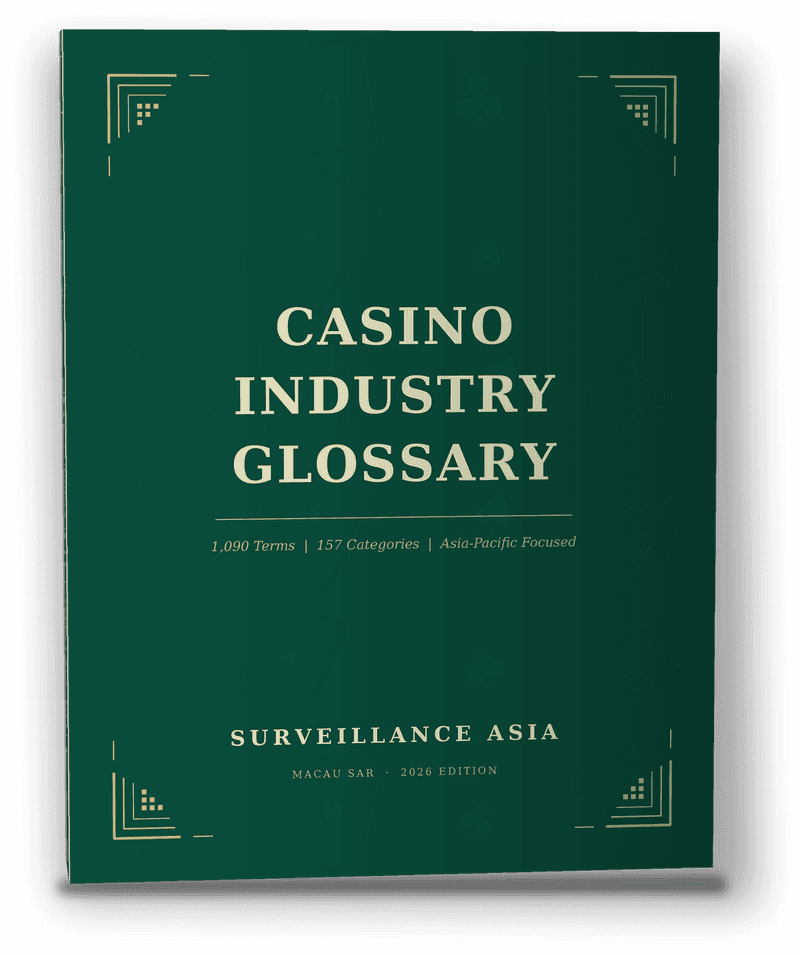
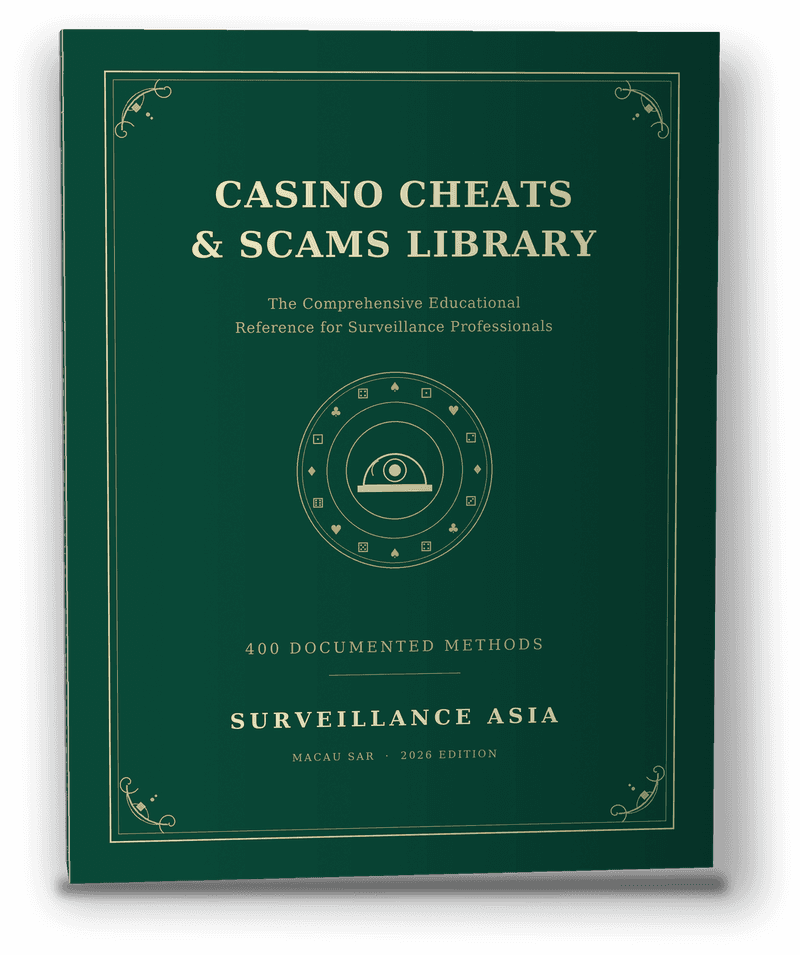
Compendium
The two editions every monitoring room keeps.
Surveillance
SOP libraries, fraud manuals and training built by people who ran the room: the same sharp eye on every shift.
View departmentCompliance
AML frameworks, CDD and audit toolkits tuned to Macau’s regulators: walk into inspection already ready.
View departmentAnalytics
Player-value, revenue-forecast and risk-scoring models that turn raw floor data into decisions.
View departmentOperations
Incident playbooks, credit-risk and security manuals that keep the whole operation tight.
View departmentJunket
Due-diligence, risk and contract templates for the relationships that carry your greatest exposure.
View departmentEnterprise · The Desk
The AI surveillance assistant that grades every answer to its source
Ask about any jurisdiction, regulation, or surveillance scenario. Every answer is cited to a source and badged, VERIFIED / REPORTED / ANALYSIS / ADVISORY, across Asia, the UAE, the US and Canada. It never asserts unverified guidance as law.
The Desk does not crawl the web. It answers only from a curated corpus in which every passage is graded to its source, whether regulator, court, gazette, news or our own analysis, so it can tell you what kind of authority an answer rests on. A general assistant cannot, because it has no way to know whether a sentence came from a regulator or from a blog.
Searched corpus · 6 sources retrieved · reasoning complete
Two duties run in parallel: a monitoring/record duty and a reporting duty. Surveillance and cage staff document the transaction, and the operator files with the Financial Intelligence Office (GIF).1
Pricing
Three paid tiers. Every one of them includes all 20 Expert Toolkits.
All prices in USD. 3-Year plans save 33%. Cancel any time. Click any tier for the full value breakdown.
Professional
For working surveillance, compliance, and operations professionals.
$3,999/ year
$7,998 / 3 years · $2,666/yr
Bundled retail value
$7,868
All 20 Toolkits ($6,970) + the downloadable Compendium ($898): $7,868 of standalone value, for $3,999.
- All 20 Expert Toolkits: free downloads
- Full Compendium (Glossary + Cheats & Scams), downloadable
- Free Intel: GGR, property map, regulator tracker, incident wall, responsible gaming
- 1 user seat
Executive
Adds the full Dashboard line and the downloadable Compendium.
$8,999/ year
$17,998 / 3 years · $5,999/yr
Bundled retail value
$21,245
All 20 Toolkits ($6,970) + the downloadable Compendium ($898) + the full Surveillance & Compliance Dashboard line ($13,377): $21,245 of standalone value on one seat, for $8,999.
- All Surveillance & Compliance Dashboards: free downloads
- All 20 Expert Toolkits: free downloads
- Full Compendium (Glossary + Cheats & Scams), downloadable
- 1 user seat
Enterprise
Multi-seat operator deployment with the Desk and internal distribution rights.
$28,999/ year
$57,998 / 3 years · $19,333/yr
Bundled retail value
$62,716
Five seats of toolkits + Compendium ($39,340) + the full dashboard line ($13,377) + the Enterprise-only Desk ($9,999): $62,716 of comparable licensing, consolidated into one $28,999 subscription.
- The Desk. Enterprise-only AI assistant
- All Surveillance & Compliance Dashboards: free downloads
- All 20 Expert Toolkits: free downloads
- Full Compendium (Glossary + Cheats & Scams), downloadable
- Enterprise distribution rights: share toolkits internally
- 5 user seats
The Standard
Why professionals rely on us.
Provenance
Written by surveillance investigators who ran Macau monitoring rooms: and reviewed against a published verification standard.
The Record
40 regulator actions tracked · 14 incident case files · 51 licensed properties · 400 documented cheat methods · 1,090 glossary terms · correction log public.
The Standard
- Verifiedprimary regulator, court or filing, named and linked
- Reportedestablished reporting, awaiting the primary document
- Analysisprofessional commentary, kept separate from fact
- Advisoryguidance offered as guidance